Showing posts with label human trafficking. Show all posts

Friday, March 18, 2016

Underground Movement to Destabilize Human Trafficking

Operation Big Sister

The 60th meeting of the United Nations Commission on the Status of Women highlights NGOs and civil society’s involvement in achieving the Sustainable Development Goals (SDGs) by 2030. The sessions showcased a variety of viewpoints and the work that is being done towards eradicating major issues we still face today while addressing them within the context of the SDGs.
The interactive panel discussion entitled What Will It Take to End Human Trafficking? The Role Media Plays & A Rarely Heard Voice for the Trafficker’s Perspective offered a unique perspective on the impact media has on perpetuating gender inequality through sexual oppression, human trafficking, and child marriage, and ways to help reverse the impact by utilizing media to make a difference.
An empowering project, led by session moderator and film producer Sheva Carr and co-producer Fred Fauchs, offers an innovative grassroots approach that opens the door for media coverage, in the form of a film and documentary putting a “spotlight” on trafficking in efforts to help stop it worldwide.
The story of the underground movement called “Stóra systir” (Big sister) begins with women in Iceland organizing themselves and taking on the issue of human trafficking. Icelandic women fought for 10 years to decriminalize women and criminalize the traffickers. In 2009, a law was put in place, but the argument was always the same when it came to implementation, “It’s the oldest profession in the world, it will not easily change”. The woman decided that if normal vectors of change do not want to budge, then they needed to do something else. They took out ads as sex workers, and when “johns” called, the voice on the other end responded with “This is your big sister watching you”. Soon this underground movement of women, and even men, responding to calls, taking down names, phone numbers, and sending “johns” to the home addresses of police officials became widely known. Gaining major attention, this story of heroic, creative and forward thinking women, helped bring this topic to the forefront, which led to the idea of making it a feature film, accompanying it with a documentary and an educational curriculum.

We are at a point in human history where technology, media, in particular, takes on a very important role in influencing people’s perceptions and educating many on issues that they either know little of or were not aware existed. The message highlighted in this session is that media and technology can and should be utilized as powerful tools that help destabilize the sex industry. These types of projects, movies, and educational platforms can inspire and empower millions of people.

Tuesday, March 15, 2016

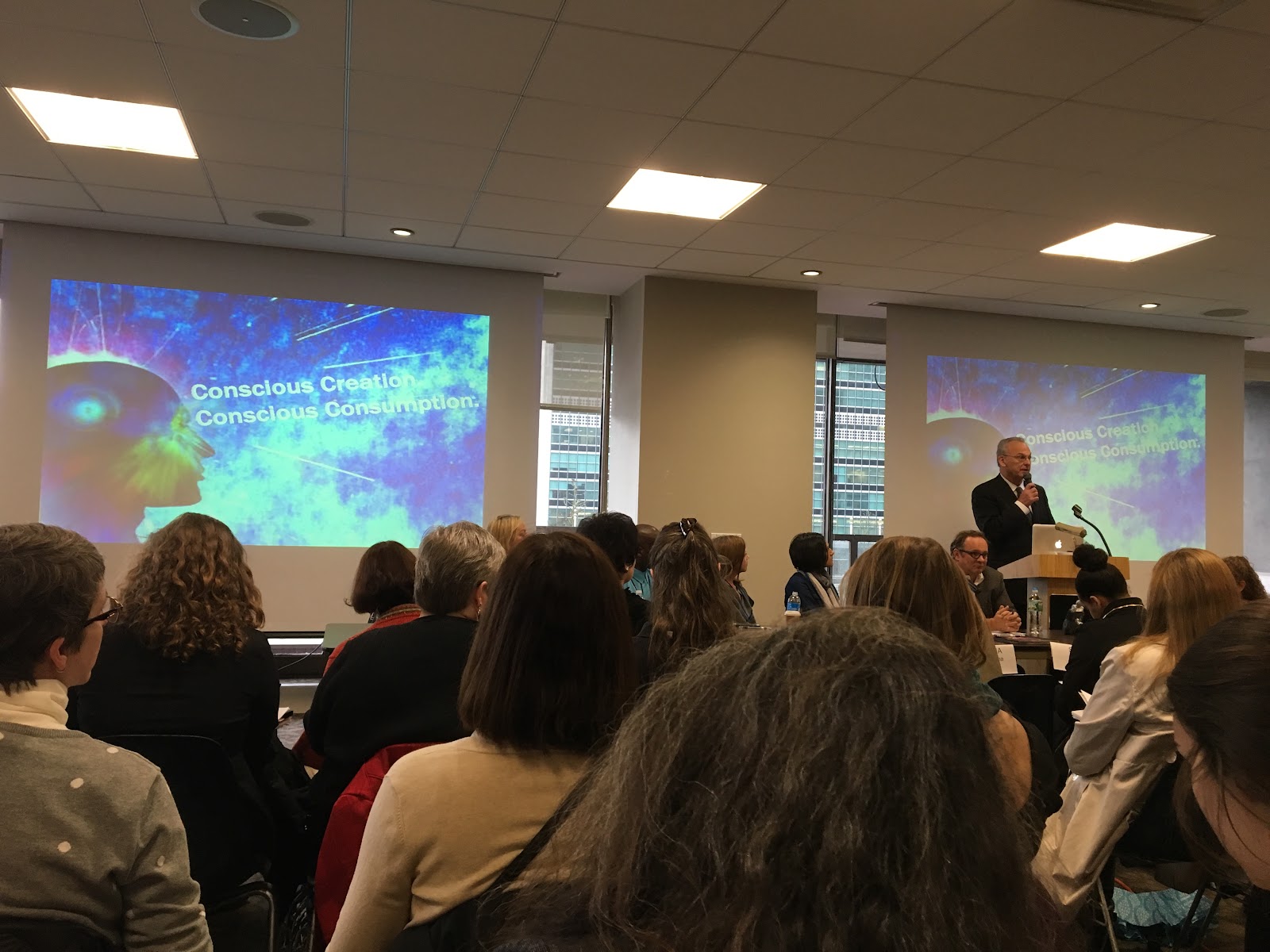
Conscious creation. Conscious consumption.

“Media is the poison, but it can also be the antidote.”
 
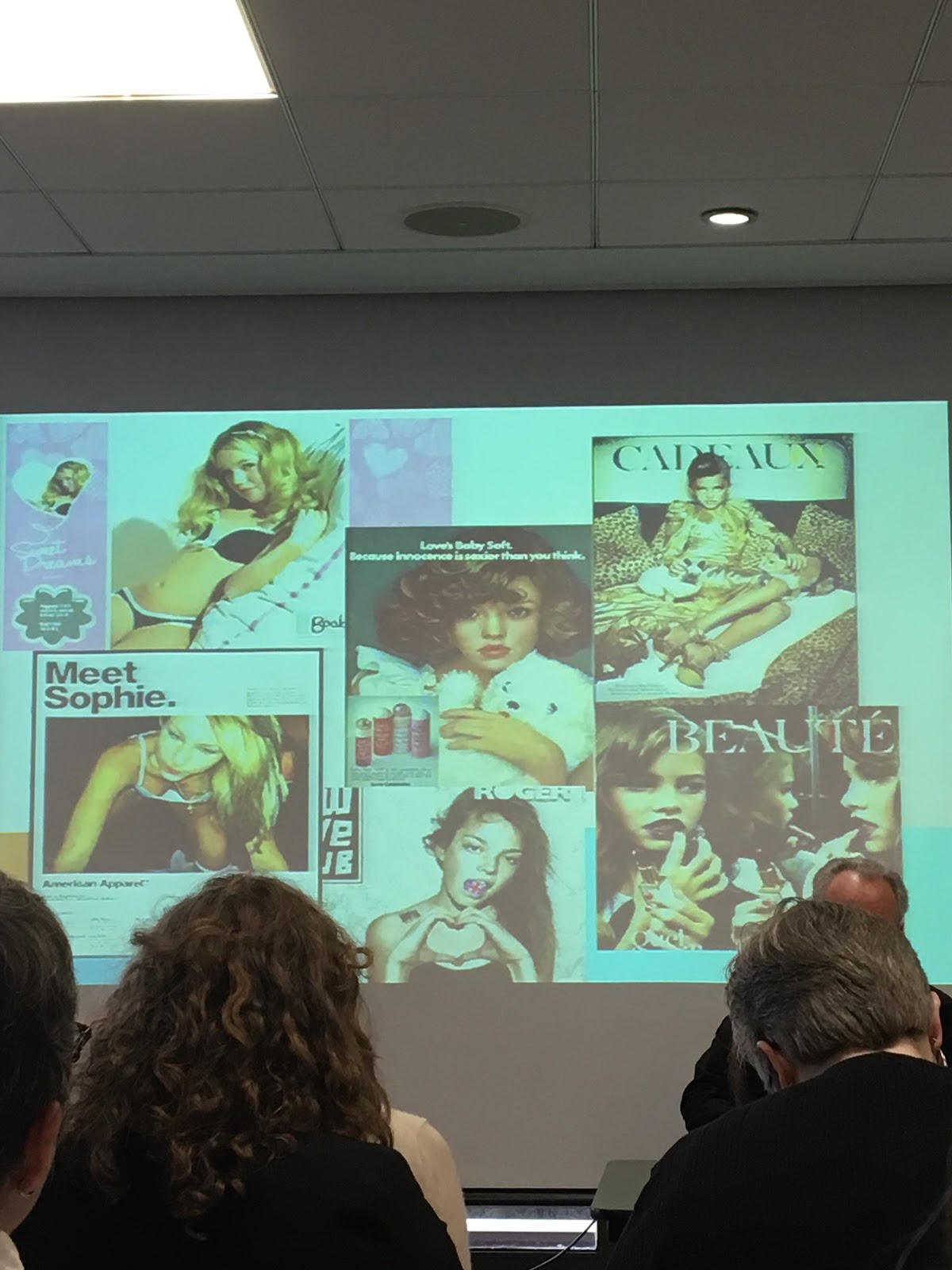
The first session I attended at the Commission on the Status of Women was titled "From the Trafficker’s Perspective: What Will it Take to End Human Trafficking". In a span of 90 minutes, a panel of 6 individuals presented the idea of using positive media to combat negative media, particularly those that objectify women and perpetuates the view of women as commodity.

Imagine for a second. It is March 8, 2016. International Women's Day. A young girl begins her day scrolling through Twitter like every other day. She scrolls to a picture uploaded by Kim Kardashian, a selfie. But it's no ordinary selfie; she is naked, censored by two thin black strips. What is going through the mind of the young girl as she looks at the photo and its 60 million hits in less than 24 hours? Are women more appreciated with little to no clothing? Is portraying this kind of image normal? If I do this, will I get popular? Will I be loved? A simple photo on social media can influence the minds of society, especially with advances in technology and increased reliance on different platforms of social media that allow us to be better connected to one another. But that is not all. Robin Thicke’s music video for his catchy hit song Blurred Lines shows signs of male domination as well as objectification of women. While the men are fully clothed, the women are minimally dressed. Lyrics include terms such as domesticate and pimping targeted at women. How does listening to songs like this effect boys and girls, men and women?

 
In the above examples, media acts as a kind of poison for the exploitation of women, however, media can also be an antidote if used correctly. Libby Spears, from The Nest Foundation, spoke about her film “Playground”, highlighting the horrors of the children human trafficking industry in the United States. Sean Southey of Media Impact introduced a project based in Bolivia. “La Caldera” is a drama series broadcasted on over 150 radio shows throughout Bolivia. Over a span of 28 12-minute episodes, the drama tackles the issue of children human trafficking, an issue deeply rooted in Bolivian society. These are just two examples of using media to give a voice to the voiceless. 

In today's society, everyone is vulnerable to fall into the trap of negative media. Efforts must be taken to ensure that there is conscious creation and conscious consumption of media.


The Truths of the Human Trafficking Industry

The reality of human trafficking? 

  • USA is the #1 destination for Americans who seek to have sex with children
  • There are over 636,000 registered sex offenders in the USA
  • Child marriage is legal in 20 countries, and 15 million girls will be sold as brides before they are 18
  • Trafficking is a $99 billion industry
  • The sexual exploitation of children is driven by the Internet
  • In the Bolivian context, human trafficking has increased 900% in the past nine years

This is a small list of the harsh truths of human trafficking shared at one of the first panel sessions of the 60th NGO Commission on the Status of Women (NGO CSW) Forum on March 15, 2016. The panel was titled “What Will It Take to END Human Trafficking? The Role Media Plays & A Rarely Heard Voice from the Trafficker’s Perspective,” sponsored by Pathways to Peace, The Fyera Foundation, and Operation Big Sister, as well as panelists from The Nest Foundation, Media Impact, and GWEN.

“Where drugs are being sold, children are being sold,” one of the panelists remarked. This reality is incomprehensible, yet it exists. Another panelist reflected on her position in the world, growing up in the United States, middle class, well and highly educated. In her experience, she was under the impression that we, here in the USA, have achieved almost full gender equality. Her first experience at the NGO CSW Forum three years ago changed her understanding. As it very well did many conference participants attending the panel. It brought her here, three years later, leading NGOs and advocating for the end of human trafficking. 

Recognizing the role media has to play in perpetuating the human trafficking industry across the world, the panelists urged us, as members of civil society, to be the “hands and feet of policy makers,” and transform the media we create. The only way to change the status of women, it was stated, is to change the perceptions of boys and men. 

Upon finishing this blog, Google image search “women in advertising.” Reflect on what populates on your browser. 

Transformation of a Sex Trafficker

“I brainwashed the women that I trafficked … You make them fall in love with you, and then you start taking them to the strip bars and to the clubs where the pimps and the prostitutes hang out so they get intrigued with the lifestyle.”

This is how a former sex trafficker explained what sex traffickers do to young women to convert them from fun-loving children to sex workers.

In the NGO CSW session of March 14, 2016, “From the Trafficker’s Perspective: What Will It Really Take to End Human Trafficking?” a former trafficker shared his spirit-rending story. After a period of abuse at home “in all dimensions,” he ran away and then suffered from a lack of food and shelter. In this period of vulnerability, at age 14, he was enlisted into the deep, dark world of human trafficking. He spent the next 35 years trading in human souls around the globe - in Colombia, Iceland, Holland, Italy, Canada, and the United States. The reach of traffickers is further and wider than one might think.

Then, came his story of transformation. He ended up in Colombia after spinning the globe to decide on a vacation spot.

“I wanted to have vacation, have fun. I had sex with girls and made them come to Canada on a visa to work … to the strip bars.”

But, then, something strange happened as he was on his way to a strip bar in downtown Bogota.

“I saw a friend and asked him where the strip bars are. I met up with him that afternoon and went downtown in Bogota. I said we’re going to the strip bar … I was going to cut through the church. I went inside the church and I saw people praying. I looked around and saw lots of saints. It was called the Church of San Francisco. I felt something in the church. I started crying. And I felt the Holy Spirit. That happened in 2003. I didn’t go to a strip bar ever again. I told the people I worked with in human trafficking that I’m done with that.”

And he was. He has not turned back.

The moderator, with Pathways to Peace and Operation Big Sister, highlighted the experience of many traffickers, themselves enticed into the lifestyle after experiencing abuse, abandonment, and manipulation. Indeed, the goal is not just to lay blame, but rather to seek out viable solutions for such scourges on society. She said that men need to be included in this conversation. Finally, as the former trafficker’s story conveys, there is hope for change and for real transformation.