Friday, March 18, 2016

Kickoff! The 2016 NGO CSW Consultation Day

A key event in support of the Commission on the Status of Women (CSW) at the United Nations is the NGO Consultation Day. Presented as a kind of kick-off to the upcoming two weeks of UN events examining the status of women throughout the world and acting as a kind of barometer for advancement on the front of women's empowerment, this daylong global interchange not only highlights the work being done by NGOs around the world, but highlights specific avenues being pursued to move the agenda forward.

The backdrop of these efforts is the 1995 Beijing Declaration and the Platform for Action, which together deliver a blueprint agenda for women's empowerment and advancement through decisions and policy. The 2016 Consultation Day brought together the purpose, thoughts, needs and anticipated directions of numerous NGOs and the people who power them.

Chief on the agenda was the concept and framework of advocacy to stop violence against women worldwide. The idea that violence is experienced in myriad formats through such broad areas as migration; education and health; poverty and finance; and water and climate change became the basis for the breakout sessions centered around these topical areas. This look into challenges faced and barriers overcome stemmed from the UN's Sustainable Development Goals (SDGs) for 2030, most specifically SDG5: Achieve gender equality and empower all women and girls  and SDG6: Ensure access to water and sanitation for all.

With these central tenets as guideposts, the 2016 NGO CSW Consultation Day created the opportunity to re-engage the discussion, re-visit the path which brought the women's empowerment movement to this point and re-envision the journey to achieving the Sustainable Development Goals of 2030.


Wednesday, March 16, 2016

Women Physicians as a Catalyst for Change

“The biggest mistake I have committed is not asking him to leave the room.”

You are a first year resident doctor. A pregnant patient comes in with her husband. She presents with symptoms of an upset stomach and headache. You look at her abdomen and notice bruises all over. You turn to the patient and ask what happened. Before the patient can open her mouth, her husband says she bumped into a table a couple days ago.
What do you do? Do you take his words as the truth or question further? Should you ask the husband to leave the room?

These questions were presented at the session “Roles of Women Physicians in Sustainable Development by Addressing VAW”. Violence against women (VAW) happens all over the world, not specific to any culture, nationality, religion, etc. In many cases of VAW, it is often a physician who has close third-party contact with the victim. Training medical students and physicians to look for signs of abuse and violence is a step towards getting the victim the necessary support she needs.

This panel, sponsored by the Medical Women's International Association and the American Medical Women’s Association African Views, consisted of a panel of 13 women physicians from all over the world. Each spoke on different programs to educate medical students on how to recognize victims of abuse and violence as well as how to handle the situation properly.

In Australia, when a physician identifies a patient as a victim of VAW, a hotline can be used to dispatch security personnel to escort the woman to a safe space as her case is being handled by police. In the United States, efforts are being made to allow physicians to be with the patient, one-on-one, as long as the patient is above 12 years of age.

It is estimated that 1 of 3 women are victims of VAW. Yet, so little is currently done on a national level to address VAW. VAW is as much of a public health issue as H1N1, Ebola, and most recently, the Zika virus. The difference in approach, from allocation of extra funds to mobilization of health professionals, shines a light on how neglectant the government is on women. If similar action plans for the Ebola breakout was enforced for VAW, would there be less women suffering around the world?
With Dr. Teresa Rohr-Kirchgraber, president of AMWA 2015-2016.

Corruption in Cambodia Tied to Violence Against Women

“The court is politicized; if you’re not a part of the system, you don’t exist. It’s so corrupt.”

These words reflect experience - the experience of a Cambodian Parliamentary member, of the opposition party, who is a woman. She was nominated for the Nobel Peace Prize in 2005, and she was awarded the Leadership Award in Washington D.C. She is the author of domestic violence laws in Cambodia. Her entire life has been about gender equality – fighting for women’s rights as human rights. One of the laws she authored regarding domestic/marital rape resulted in her almost losing her seat in parliament due to challenging Cambodian culture. She says that challenging culture is inevitable if one wants to make an impact.

The NGO CSW session of March 14, 2016, “Ending Violence Against Women and Girls,” brought together panelists from Morocco, Colombia, Iran, and Cambodia. They presented social, cultural, financial, and political factors as intersecting with the issue of violence against women and of women’s inequality in their various nations and regions. The women represented at this session work with UN Watch, Liberal International, and the International Network of Liberal Women.

In the case of Cambodia, the parliamentary official discussed the role of corruption in politics and the legal system in blocking access to women seeking justice for violence perpetrated against them. She said:

“As soon as you go to court, you have to pay the judge or he won’t even let you into the courtroom; so, access to justice is limited for those who don’t have the resources.”

She cited the negative effects this has, especially on rural women in poverty who do not have the resources that allow them to be heard within this corrupt system.

The Cambodian parliamentary member continued:

“A political campaign must be used for any gender-based movement; otherwise, government leaders won’t do anything.”

Even though the political and legal system seems both corrupt and apathetic, she chooses to work within it, though in actuality transcending it, so that she can bring change that provides hope and justice to women facing violence.

In Times of Need, Women Stand Together As One

“Women are 14 times more likely to die in disaster-ridden areas.”
 
In times of crisis, from war to natural disasters, women are often neglected in the process of relief. The session titled “Ensuring Gender Equality and Sustainable Livelihood in Post-Disaster Situations” was lead by the Women’s Rehabilitation Center (WOREC) Nepal. WOREC worked extensively in Nepal following the devastating earthquake thag struck the country in April 2015. As infrastructures collapsed to the ground, people lost their homes, businesses, and even loved ones. As people set up shelter alongside the debris, WOREC stepped in to provide help, particularly to the women and children. 

WOREC launched the Sneha Campaign, sneha meaning love and compassion in Nepalese. They recognized that lactating women, pregnant women, and elderly women were most at risk. They also recognized that third-party support can be viewed as a burden by the women in Nepal, a favor that they must soon repay. Instead of giving food and water, WOREC took a novel approach to provide “dignity kits”. 

What are dignity kits?
When asked what the worse part is about the earthquake, with no hesitation women said not being able to bathe. Those of us who are fortunate to not be living in a disaster area take simple things like bathing, brushing our teeth, and for the women, having access to menstrual products for granted. For the Nepalese women, not being clean was a hit to their dignity. With this knowledge, WOREC made dignity kits full of soaps, sanitary napkins, underwear, bras, etc.

WOREC also works to provide psychosocial counseling for all women. Though it often goes unnoticed, data suggests that sexual violence and exploitation increases during disasters. To combat this reality, WOREC set up “female friendly spaces” where the women can go to receive one-stop help.

It is normal in most governments that women groups are least funded. During times of crisis, the numbers don't seem to change despite the increased need for help. People must realize that even in crisis, women are still menstruating, still pregnant, still nursing. In crisis, the most affected and disadvantaged are women. More needs to be done to reflect this reality.

Tuesday, March 15, 2016

Collective Advocacy: Leverage Because She is Not Alone

“Unless you draw on women’s expertise and also use women as planners … and any marginalized group, you’re leaving chips on the table.”

The NGO CSW session of March 14, 2016, “The Power of Women and Girls’ Voices: New Directions in Collective Advocacy,” gathered together leaders from Women Thrive Worldwide, Rural Women’s Network Nepal, Forum for African Women Educationalists, Generation Initiative for Women and Youth Network Nigeria, and World Learning.

One of the panelists lauded Women Thrive Worldwide for the NGO’s success at lobbying the UN to include equitable, inclusive, and quality education, rather than simply access to education, as part of the UN’s Sustainable Development Goals for these next 15 years. This is a clear example of the result of collective advocacy, of listening carefully to the voices of those affected by education that fails on indicators of these qualities.

Women Thrive Worldwide communicated 5 major lessons about how collective advocacy can be used most powerfully at the global level:

1. Building relationships among coalition members is critical.
2. Evidence-based messaging is powerful.
3. Diversity of advocates makes the collective voice more relevant.
4. Research, training, coaching, tools, and engagement should be concerted, representative, and 
    applicable.
5. Advancing the priorities and solutions of women and girls living in poverty, especially, is a top 
    goal for NGOs as they meet directly with decision-makers and stakeholders.

One of the panelists asserted the following:

“You have unique capability when you draw on those voices; you have authenticity that leads to a power persuasion that no one can match; third, you eliminate tremendous amounts of talent [if leaving them out]. Unless you draw upon them for advocacy, you’re not credible.”

Certainly, women and girls, and any other group suffering inequality and its blight on the human soul, do know what is best for themselves. Their voices must be heard, and they must matter.

Sexuality: It's a Personal Matter...

“Take a moment to remember a time in our own lives when we did not have control of our own sexuality.”

That was the powerful opening statement to the CSW session “Why Addressing the Control of Sexuality is Critical to Ending Child Marriage”. Talk of sexuality is considered taboo in many contexts though it parallels gender, which receives much attention. People will shake off the topic as being a personal matter, a cultural tendency, that an outsider should not question. Yet, it is sexuality that fuels the gender inequality in the world even in 2016.

When a family is in poverty, why is the girl the first to be married off and not the boy? What is the underlying value in a woman’s virginity that would justify marrying off a 12 year old girl? Why is a child bride no longer considered a child after marriage, despite her obvious young age?

The panelists represented NGOs that work to end child marriage in various parts of the world. Anthony Keedi, a representative from Abaad, a NGO based in Lebanon, spoke on challenging the concept of child marriage in the Middle East. Abaad is currently working with government officials to revoke a penal code in Lebanon that states if a man rapes a woman but the proposes to marry her for a minimum of five years, he can escape a prison sentence. Laws such as these stem from a strong cultural background of male dominance and sense of entitlement. Keedi says that in order to end child marriage, one must first tackle the cultural gender roles and gender norms. He points out that in the context of the Middle East where religion is a strong identity, introducing a concept such as gender equality may face opposition as people do not want to go against what they believe to be a religious culture. For this reason, Abaad purposefully works with religious leaders in an effort to help people realize that gender equality can be accomplished while still exercising one’s faith. Though it is a work in progress, it is a step towards dispelling myths on the "unimportant" topic of sexuality.

Lack of control of sexuality is something everyone experiences at some point in life; it is the extent of the lack of control that creates the need for intervention.

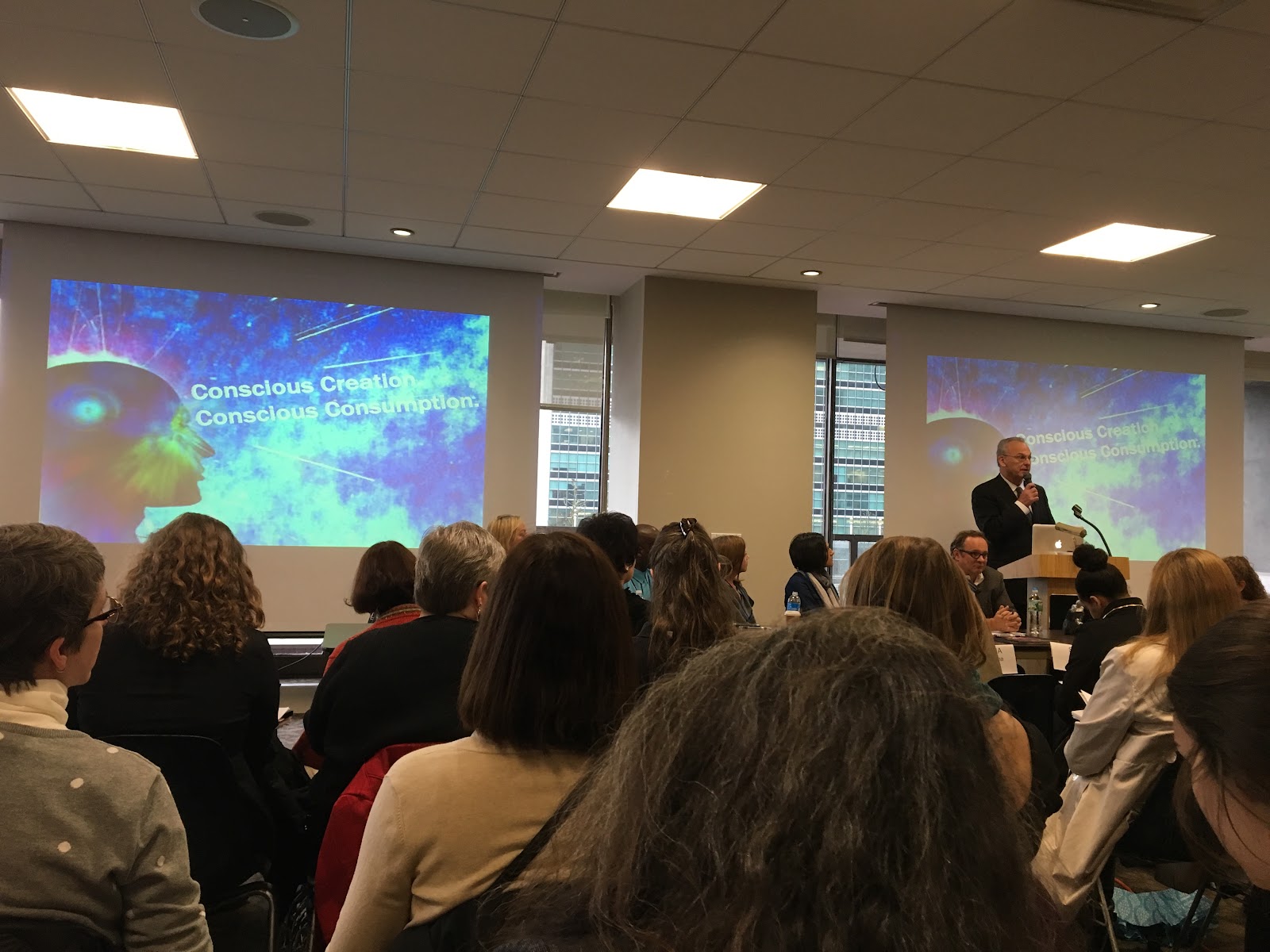
Conscious creation. Conscious consumption.

“Media is the poison, but it can also be the antidote.”
 
The first session I attended at the Commission on the Status of Women was titled "From the Trafficker’s Perspective: What Will it Take to End Human Trafficking". In a span of 90 minutes, a panel of 6 individuals presented the idea of using positive media to combat negative media, particularly those that objectify women and perpetuates the view of women as commodity.

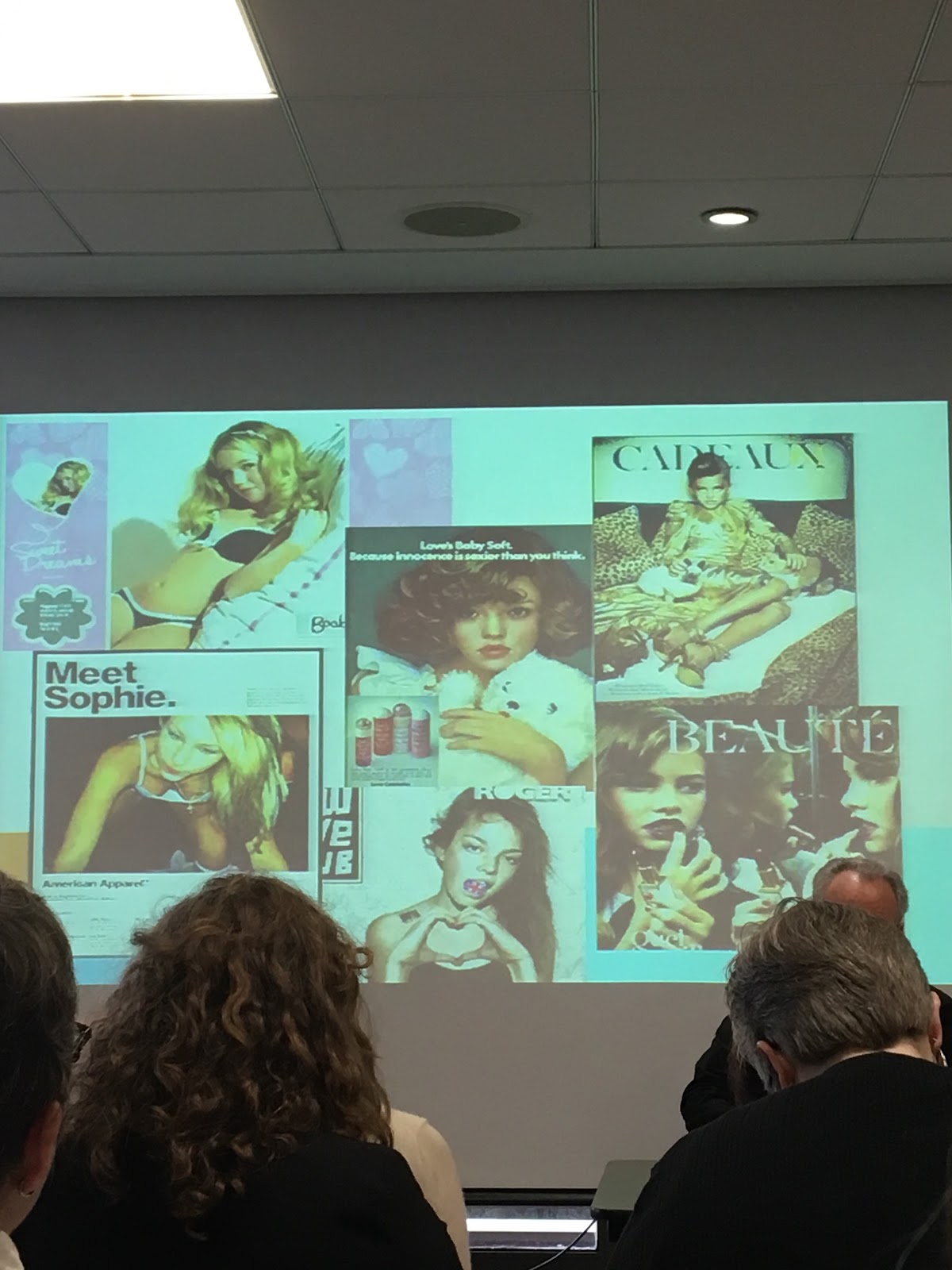
Imagine for a second. It is March 8, 2016. International Women's Day. A young girl begins her day scrolling through Twitter like every other day. She scrolls to a picture uploaded by Kim Kardashian, a selfie. But it's no ordinary selfie; she is naked, censored by two thin black strips. What is going through the mind of the young girl as she looks at the photo and its 60 million hits in less than 24 hours? Are women more appreciated with little to no clothing? Is portraying this kind of image normal? If I do this, will I get popular? Will I be loved? A simple photo on social media can influence the minds of society, especially with advances in technology and increased reliance on different platforms of social media that allow us to be better connected to one another. But that is not all. Robin Thicke’s music video for his catchy hit song Blurred Lines shows signs of male domination as well as objectification of women. While the men are fully clothed, the women are minimally dressed. Lyrics include terms such as domesticate and pimping targeted at women. How does listening to songs like this effect boys and girls, men and women?

 
In the above examples, media acts as a kind of poison for the exploitation of women, however, media can also be an antidote if used correctly. Libby Spears, from The Nest Foundation, spoke about her film “Playground”, highlighting the horrors of the children human trafficking industry in the United States. Sean Southey of Media Impact introduced a project based in Bolivia. “La Caldera” is a drama series broadcasted on over 150 radio shows throughout Bolivia. Over a span of 28 12-minute episodes, the drama tackles the issue of children human trafficking, an issue deeply rooted in Bolivian society. These are just two examples of using media to give a voice to the voiceless. 

In today's society, everyone is vulnerable to fall into the trap of negative media. Efforts must be taken to ensure that there is conscious creation and conscious consumption of media.


The Need for the Voices of Women in Sustainable Development

Image result for sustainable development goal

The panel began by looking specifically at the 16th Sustainable Development Goal, which calls for the promotion of peaceful, just, and inclusive societies, as well as accountable institutions at every level of society. The starting level, the moderator noted, is the community level. She then posed the questions: Will these goals make a difference for rural women in poor communities? What kind of institutions will empower her? 

The panel was titled “Women’s Leadership in Community-Led Development,” and was sponsored by two organizations, The Hunger Project, and the Movement for Community-Led Development, which consists of a network of 25 international NGOs. The panel discussed examples of women’s leadership in development at the community level, in contexts such as India and Ghana. Some of the positive outcomes of women in leadership included women’s empowerment, transformative leadership, and increased opportunities for relationships between women and their leaders. 

A strong theme throughout the panel was the inclusion of women. “Women know what is best for women,” one of the panelists from Women Thrive Worldwide stated. A seemingly obvious statement, but often overlooked in all levels of global development. This was demonstrated as a panelist from the Ford Foundation asked us to reflect gender representation within the United Nations. The decision-makers leading the United Nations continues to be that of privileged Western men, and voices of women are not adequately represented at arguably the largest international organization advocating for gender equality. Another panelist from Save the Children International noted that development cannot be sustainable unless it is inclusive and participatory, supporting women and girls as agents of change. 

If women in rural communities are the most disadvantaged and impoverished group of people in the world, the only way to support them is to talk to them, include them in conversation, and bring their individual and collective voices into the processes of decision-making and development.

The Truths of the Human Trafficking Industry

The reality of human trafficking? 

  • USA is the #1 destination for Americans who seek to have sex with children
  • There are over 636,000 registered sex offenders in the USA
  • Child marriage is legal in 20 countries, and 15 million girls will be sold as brides before they are 18
  • Trafficking is a $99 billion industry
  • The sexual exploitation of children is driven by the Internet
  • In the Bolivian context, human trafficking has increased 900% in the past nine years

This is a small list of the harsh truths of human trafficking shared at one of the first panel sessions of the 60th NGO Commission on the Status of Women (NGO CSW) Forum on March 15, 2016. The panel was titled “What Will It Take to END Human Trafficking? The Role Media Plays & A Rarely Heard Voice from the Trafficker’s Perspective,” sponsored by Pathways to Peace, The Fyera Foundation, and Operation Big Sister, as well as panelists from The Nest Foundation, Media Impact, and GWEN.

“Where drugs are being sold, children are being sold,” one of the panelists remarked. This reality is incomprehensible, yet it exists. Another panelist reflected on her position in the world, growing up in the United States, middle class, well and highly educated. In her experience, she was under the impression that we, here in the USA, have achieved almost full gender equality. Her first experience at the NGO CSW Forum three years ago changed her understanding. As it very well did many conference participants attending the panel. It brought her here, three years later, leading NGOs and advocating for the end of human trafficking. 

Recognizing the role media has to play in perpetuating the human trafficking industry across the world, the panelists urged us, as members of civil society, to be the “hands and feet of policy makers,” and transform the media we create. The only way to change the status of women, it was stated, is to change the perceptions of boys and men. 

Upon finishing this blog, Google image search “women in advertising.” Reflect on what populates on your browser. 

Legal Systems of Prostitution across the Globe are Failing our Women

The room was overflowing with conference participants, with many sitting on the floor and others crowding the doorway and hall outside. At the front sat a panel of six women, all with a testimony to share with us. A testimony demonstrating their personal realities as women who have survived prostitution.

The panel was titled “Impact Testimony: The Reality of Prostitution’s Legal Frameworks on the Ground,” sponsored by SPACE International (Survivors of Prostitution-Abuse Calling For Enlightenment), The Coalition Against Trafficking in Women, and The Women’s Front of Norway. The stories the panelists told brought to life jarring truths about prostitution in Canada, the United States, England, and Germany. Although each had different experiences, there were commonalities among all of them. Many of them were victims of child exploitation, and were led into prostitution through family, abusive relationships, and severe poverty. Prostitution, a panelist remarked, is not a choice.

In all contexts, lack of government and legal support inhibits women and girls in prostitution from breaking free, and in many cases, works against them. In the countries discussed in the panel, the common legal frameworks are either prohibition or legality of prostitution. In either case, it is the women being prostituted and trafficked who are silenced, marginalized, and criminalized, while the buyers of sex and pimps remain free.

All panelists supported that prostitution and trafficking are one in the same, and strongly advocated for the implementation of the Nordic, or Abolitionist, Model as the most adequate for bringing justice for women being prostituted and trafficked. This model supports laws which criminalizes the person who buys the sex, and decriminalizes the sellers. The reality is this: current legal structures regarding prostitution in some of the world’s most powerful countries serve to marginalize and imprison girls and women, the victims. It is time for this to change.

Men of Faith: Fight Gender-Based Violence by “Loving Your Neighbor”

“Most men don’t overtly abuse women or girls or other gender identities, but that’s our apathy by not doing anything, challenging others, so we’re complicit in this gender-oppression outside and inside the church.”

Men of faith, love and serve those in your community by being attentive to gender-based violence wherever and whenever you suspect it. Take action. Start by respecting and honoring the women in your lives so that you are setting the right example. Then, influence those you can to do the same. Do even more than that. Hold them accountable to do so.

These were just some of the messages communicated in the NGO CSW session of March 14, 2016, “Engaging Men of Faith to Be Champions in the Fight to End Gender-Based Violence.” The session was led by We Will SpeakOut.US, a coalition of U.S. faith-based organizations that have united to educate and take action against gender-based violence. The conversation included the moderator, who in the past served as a journalist covering the 1994, Rwandan genocide; an Episcopal church pastor from Liberia; an Anglican church pastor from Burundi; and the director of CONNECT, a local New York-based organization dedicated to ending family and gender violence.

The presenters gave several concrete steps for men of faith to take in combatting gender-based violence. They said that pastors and leaders in faith-based institutions must be challenged in regards to the sometimes harmful messages they convey to their congregations that perpetuate gender-based violence and a lack of professional help-seeking by victims. They spoke out against the prevalent apathy of men of faith on this issue. Further, they cited the “rumor mill” in such organizations, along with the associated negative attention that brings to victims, as a major reason for victims not reporting these acts of violence. 75% of abuse goes unreported, they said.

Finally, the Liberian pastor encouraged parents to have conversations with their children about sexual issues and gender-based violence so as to bring attention to such important areas that will serve to help protect and preserve people’s good, and especially women’s security.

Who is Part of My “Community?”

“Is the woman in the headscarf part of my community? Is the black man a part of my community? We need to ask hard questions about ‘community.’”

These thought-provoking questions were posed at the NGO CSW session of March 14, 2016, “Women’s Leadership for Community-led Development.” Speakers came from such NGOs as The Hunger Project, The Hunger Project-India, the Alliance for Women’s Solutions, Women Thrive Worldwide, Global Strategy – Ford Foundation, and Save the Children International.

The concept of “community” was highlighted due to one speaker’s assertion that the term can easily be conceived of in such a way as to exclude and marginalize certain groups or individuals. An example she used was that of nations setting refugee quotas in recent times in relation to humanitarian crises in places like Syria, Eritrea, and Afghanistan. She took particular issue with the conception of “community” as tied to a particular place, especially in light of such crises. Governments of nation-states pick and choose who to accept, and how many to allow in, while millions of people are desperate to escape oppressive, life-threatening situations.

Including this and other reasons for relocation, the speaker talked of the global transformation that is seeing women, men, and children from all over the world moving both within and across national boundaries. What does “community” mean to them? What could it mean? What should it mean? She emphasized the common humanity of all.

Further, the speaker noted that even within specific locales, people’s sense of “community” often differs based on their social status and other factors. She said that a Dalit (“untouchable) woman has quite a different conception of who is part of her community as compared to an Indian of the upper caste. As well, many migrant laborers move from rural to urban regions, and back again, throughout their lifetimes. She called for more of an understanding of those in such in-between spaces.

“I’m sorry, but our problems are yours, and your problems are ours,” she said to thunderous applause from the audience.

The perspective of women on “community” tends to be more inclusive and participatory to all – indeed, more global. Women, having suffered their own exclusions in societies everywhere, are in a unique position to stand up for all others who face exclusion in our global world. And they want to hear others’ unique stories, needs, and desires, and then act based on an understanding of that. We are one people. All belong. All are loved.

Transformation of a Sex Trafficker

“I brainwashed the women that I trafficked … You make them fall in love with you, and then you start taking them to the strip bars and to the clubs where the pimps and the prostitutes hang out so they get intrigued with the lifestyle.”

This is how a former sex trafficker explained what sex traffickers do to young women to convert them from fun-loving children to sex workers.

In the NGO CSW session of March 14, 2016, “From the Trafficker’s Perspective: What Will It Really Take to End Human Trafficking?” a former trafficker shared his spirit-rending story. After a period of abuse at home “in all dimensions,” he ran away and then suffered from a lack of food and shelter. In this period of vulnerability, at age 14, he was enlisted into the deep, dark world of human trafficking. He spent the next 35 years trading in human souls around the globe - in Colombia, Iceland, Holland, Italy, Canada, and the United States. The reach of traffickers is further and wider than one might think.

Then, came his story of transformation. He ended up in Colombia after spinning the globe to decide on a vacation spot.

“I wanted to have vacation, have fun. I had sex with girls and made them come to Canada on a visa to work … to the strip bars.”

But, then, something strange happened as he was on his way to a strip bar in downtown Bogota.

“I saw a friend and asked him where the strip bars are. I met up with him that afternoon and went downtown in Bogota. I said we’re going to the strip bar … I was going to cut through the church. I went inside the church and I saw people praying. I looked around and saw lots of saints. It was called the Church of San Francisco. I felt something in the church. I started crying. And I felt the Holy Spirit. That happened in 2003. I didn’t go to a strip bar ever again. I told the people I worked with in human trafficking that I’m done with that.”

And he was. He has not turned back.

The moderator, with Pathways to Peace and Operation Big Sister, highlighted the experience of many traffickers, themselves enticed into the lifestyle after experiencing abuse, abandonment, and manipulation. Indeed, the goal is not just to lay blame, but rather to seek out viable solutions for such scourges on society. She said that men need to be included in this conversation. Finally, as the former trafficker’s story conveys, there is hope for change and for real transformation.